Hey there! I’m a guy running a support structures supplier business. Over the years, I’ve witnessed firsthand how support structures have evolved. It’s been a wild ride, and I’m super excited to share this journey with you. Support Structures
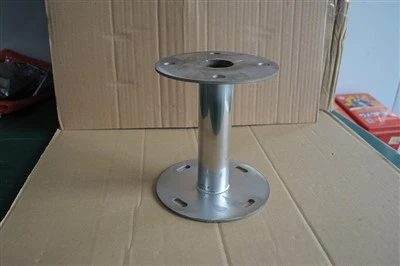
Early Days: The Basics
Back in the day, support structures were pretty basic. We’re talking simple wooden beams and metal rods. These were mainly used in construction for buildings and bridges. The design was straightforward – the goal was to hold up weight and keep things stable. For example, in the early 1900s, when building a small house, we’d use thick wooden beams placed at regular intervals to support the roof. There wasn’t much fancy engineering involved. It was all about trial and error. Carpenters and builders would rely on their experience and basic math to figure out how much weight a beam could handle.
The materials were limited too. Wood was a popular choice because it was easy to work with and relatively cheap. Metal was also used, but it was more expensive and harder to shape. Galvanized steel started to gain popularity in the mid – 1900s because it was more resistant to rust. However, the manufacturing process was still quite basic, and the quality could vary a lot.
The Industrial Revolution: A Game – Changer
The Industrial Revolution was a huge turning point for support structures. With the invention of new machinery, we could produce support structures on a much larger scale. Mass production meant that these structures became more affordable and widely available. For instance, factories could churn out standardized steel beams at a much faster rate. This led to the construction of larger and more complex buildings. Skyscrapers started to pop up in big cities, and support structures had to be redesigned to handle the increased height and weight.
Engineering also became more sophisticated. Architects and engineers started using mathematical models to calculate the stress and strain on support structures. This allowed for more precise designs, reducing the risk of failure. Reinforced concrete emerged as a revolutionary material during this time. By embedding steel bars in concrete, we could create structures that were stronger and more durable than ever before. Bridges became longer and more stable, and buildings could reach new heights.
The Digital Age: Precision and Customization
Fast forward to the digital age, and things have changed dramatically. Computer – Aided Design (CAD) software has revolutionized the way we design support structures. We can now create 3D models of structures and simulate how they’ll perform under different conditions. This means we can detect potential problems before we even start building. For example, if we’re designing a support structure for a wind turbine, we can use CAD to model the impact of strong winds and adjust the design accordingly.
3D printing has also made its way into the support structure industry. We can now print custom – made support structures with complex geometries that would be impossible to create using traditional manufacturing methods. This is especially useful in industries like aerospace and medical, where precision is crucial. For instance, in aerospace, 3D – printed support structures can be lighter and more aerodynamic, improving fuel efficiency.
The use of smart materials is another exciting development. These materials can change their properties in response to external stimuli, such as temperature or pressure. For example, some smart alloys can ‘remember’ their original shape, which can be useful in applications where the support structure needs to adapt to changing conditions.
Sustainability: A New Focus
In recent years, sustainability has become a major focus in the support structure industry. We’re all more aware of the impact our choices have on the environment, and we’re looking for ways to make our products more eco – friendly. For example, we’re using more recycled materials in our support structures. Steel can be recycled multiple times without losing its strength, and using recycled steel reduces the need for new mining, which is energy – intensive and has a big environmental footprint.
We’re also designing support structures to be more energy – efficient. For example, in building construction, we can use materials that have good insulation properties, reducing the energy needed to heat or cool the building. Some support structures are even designed to harvest solar energy or collect rainwater, making the building more self – sufficient.
Our Role as a Supplier
As a support structures supplier, we’ve had to adapt to these changes over time. We’ve invested in the latest technology, like CAD software and 3D printers, to be able to offer our customers the best – in – class products. We’ve also expanded our range of materials to include recycled and sustainable options.
We work closely with our customers to understand their specific needs. Whether it’s a small – scale project like a backyard shed or a large – scale industrial building, we’re committed to providing the right support structures. We offer customized solutions, so if a customer has a unique design or a specific performance requirement, we can work with them to make it happen.
Our quality control has also improved significantly. With the help of advanced testing equipment, we can ensure that our support structures meet the highest standards. We test for strength, durability, and other important properties to make sure that our products are safe and reliable.
Get in Touch for Your Needs
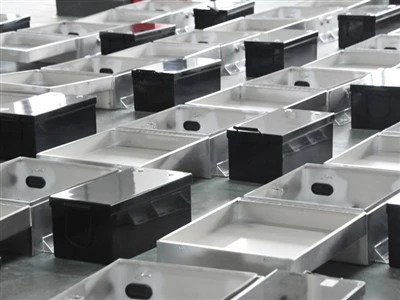
If you’re in the market for support structures, whether it’s for a new construction project, an upgrade to an existing structure, or something completely out of the box, we’d love to hear from you. We’ve got the experience, the technology, and the commitment to sustainability to provide you with the best support structures available.
All in One Battery Pack Don’t hesitate to reach out to us. We’re here to answer your questions, provide you with detailed information, and work with you to find the perfect support structure solution for your project. Let’s build something great together!
References
- "A History of Structural Engineering" by E. S. Ferguson
- "Lectures on the History of Building Construction" by Henry Petroski
- "The Digital Transformation of the Construction Industry" by various authors in the Journal of Construction Innovation
Wuhu Qiahao Metal Products Co., Ltd.
As one of the most professional support structures manufacturers and suppliers in China, we warmly welcome you to buy premium support structures made in China here from our factory. All customized products are with high quality and competitive price. Contact us for pricelist.
Address: Building 5, No. 3 Yongtai Road, Wanzhi District, Wuhu City, Anhui Province, China
E-mail: 290418907@qq.com
WebSite: https://www.qiahaometal.com/
