Yo, gear enthusiasts! I’m stoked to share some insights on how to select the right gear for a specific application. As a gear supplier, I’ve seen it all – from small DIY projects to large industrial setups. So, let’s dive right in! Gear

Understanding Your Application
First things first, you gotta have a clear idea of what you’re using the gear for. Is it for a high – speed machine, like a drill press? Or maybe it’s for a slow – moving, high – torque application, such as a conveyor belt. The nature of the task will heavily influence the type of gear you need.
If you’re dealing with a high – speed application, you’ll want gears that can handle the rapid rotation without wearing out too quickly. Spur gears are a common choice here. They’re simple, efficient, and can transfer power smoothly at high speeds. But they can be a bit noisy, so if noise is an issue in your application, you might want to look into helical gears. Helical gears have angled teeth, which engage more gradually than spur gears, reducing noise and vibration.
On the other hand, for high – torque applications, you need gears that can withstand a lot of force. Worm gears are great for this. They can provide a high gear ratio in a compact space, which means you can get a lot of torque from a relatively small motor. However, they’re not as efficient as some other types of gears, so you need to consider the power losses.
Load and Torque Requirements
The load that the gear will be carrying is another crucial factor. You need to know the maximum load that the gear will experience during operation. This includes both the static load (the weight or force that the gear is supporting when it’s not moving) and the dynamic load (the additional force that the gear experiences when it’s in motion).
To calculate the torque requirements, you need to know the force that the gear is applying and the distance from the center of the gear to the point where the force is applied. Once you have the torque requirements, you can choose a gear with the appropriate pitch diameter and tooth profile. A larger pitch diameter can handle more torque, but it also means the gear will be bigger and heavier.
Speed and Ratio
The speed at which the gear needs to operate is also important. You need to know the input speed (the speed of the motor or power source) and the output speed (the speed at which you want the driven component to move). The gear ratio is the ratio of the input speed to the output speed.
For example, if you have a motor that runs at 1500 RPM and you want the output to be 150 RPM, you need a gear ratio of 10:1. You can achieve this using different combinations of gears, such as a large gear driving a small gear or a series of gears in a gear train.
When choosing a gear ratio, you also need to consider the efficiency of the gears. A high gear ratio can sometimes result in lower efficiency, especially in gears like worm gears. So, you need to find a balance between getting the right speed and maintaining a reasonable level of efficiency.
Material and Quality
The material of the gear is a big deal. Different materials have different properties, such as strength, hardness, and wear resistance. For most general applications, steel gears are a popular choice. They’re strong, durable, and can handle a lot of stress. However, they can be heavy and expensive.
If weight is a concern, you might want to consider aluminum or plastic gears. Aluminum gears are lightweight and have good corrosion resistance. Plastic gears are even lighter and can be a cost – effective option for low – load applications. But they’re not as strong as steel gears and may not be suitable for high – torque or high – speed applications.
The quality of the gear also matters. You want gears that are precisely machined and heat – treated to ensure proper hardness and durability. Low – quality gears can wear out quickly, cause noise and vibration, and even lead to machinery failure. So, always look for gears from a reputable manufacturer.
Environmental Conditions
The environment in which the gear will operate is another factor to consider. If the gear will be exposed to moisture, chemicals, or high temperatures, you need to choose a material that can withstand these conditions.
For example, in a wet environment, you might want to use stainless steel gears or gears with a protective coating to prevent corrosion. In a high – temperature environment, you need gears made from materials that can maintain their strength and hardness at elevated temperatures.
Cost
Last but not least, cost is always a consideration. You need to find a balance between getting the right gear for your application and staying within your budget. Remember, the cheapest option may not always be the best in the long run. A slightly more expensive gear that is of higher quality and better suited to your application can save you money in the long term by reducing maintenance and replacement costs.
As a gear supplier, I can help you find the right gear for your specific application. Whether you’re in the middle of a DIY project or running a large industrial operation, I’ve got you covered. If you’re unsure about what gear you need, just hit me up with the details of your application – things like the load, speed, environment, and your budget. I’ll work with you to figure out the best solution.
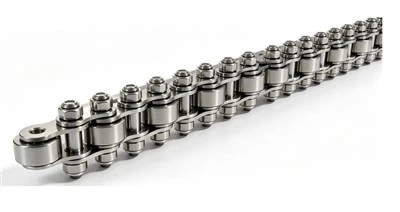
Stainless Steel Chain If you’re interested in purchasing gears, or you just want to have a chat about your gear needs, don’t hesitate to reach out. I’m here to make sure you get the right gear for the job, and at a fair price. Let’s get your project up and running smoothly!
References
- "Mechanical Engineering Design" by Joseph E. Shigley, Charles R. Mischke, and Richard G. Budynas.
- "Gear Design and Application" by Dudley, Darle W.
Anhui Huihuang Chain Transmission Co., Ltd.
Anhui Huihuang Chain Transmission Co., Ltd. is one of the most professional gear manufacturers and suppliers in China, also supports high quality customized service. Please feel free to buy discount gear made in China here from our factory. Welcome to contact us for pricelist and free sample.
Address: NO.3 YONGQIANG ROAD. JIXI.ANHUI.CHINA
E-mail: 754590660@qq.com
WebSite: https://www.hhchains.com/
