When I first started speaking to machinists and production managers over a decade ago—back when I was still troubleshooting prototype holders in my own small shop before launching our supply business—I noticed a pattern. Almost everyone I worked with would ask the same two questions: “Which holder is better?” and “What’s the actual difference between a solid milling cutter holder and a modular one?” It makes total sense, too—choosing the right holder isn’t just a small part of a machining setup; it’s the difference between a perfect part that ships on time and a week of scrapped blanks, missed deadlines, and frustrated teams. After seeing hundreds of shops rely on our holders to keep their lines running, I’ve learned that the answer never comes down to “one is always better.” It comes down to understanding exactly what makes each type tick, and matching that to your specific work. Milling Cutter Holders
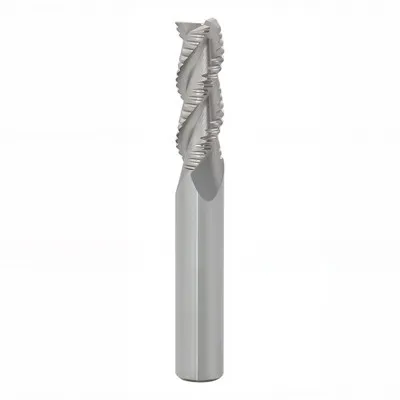
Let’s start with the basics, because you can’t tell them apart without knowing the core design. A solid milling cutter holder—sometimes called a one-piece holder, as if it’s carved from a single block of hardened steel—doesn’t have any moving or interchangeable parts. You slide your milling cutter into the end, tighten the set screw or collet, and that’s it. No extra joints, no additional connections between the holder body and the tool. A modular holder? That’s a different story. It’s built like a set of interchangeable parts: you have a base that fits into your CNC machine’s spindle, a middle adaptor shank, and then a cutting head that locks into that shank. Swap the head, and suddenly you’re holding a different cutter entirely, all with the same base and shank. At first glance, both look like just metal shafts that hold tools, but once you dig into how they perform, those design differences snowball into major real-world impacts.
Let’s talk about rigidity first, because for most high-precision machining, this is king. Solid holders win here, hands down. Without any joint between the shank and the tool, there’s nowhere for vibration to creep in. When you’re taking a deep cut on a stainless steel component—like the crankshaft for a small engine, or a precision aerospace bracket that needs tolerances tighter than a human hair—any tiny amount of flex can leave you with a part that’s unusable. I remember one customer, a job shop that specializes in medical device parts, switched from solid holders to modular ones about eight years ago to save a few bucks on tool changes. Within three months, they were sending back 12% of their parts because of chatter marks—those wavy lines on the surface that come from vibration during cutting. They came back to us, and we worked with them to identify that the modular heads, when tightened, had a tiny gap (less than a thousandth of an inch, but enough) between the head and shank that flexed under load. Once they swapped back to solid holders, their error rate dropped to under 1%, and they haven’t looked back since. That’s not to say modular holders are weak—they just can’t match the rigidity of a one-piece design, especially for heavy-duty cuts or fine, high-tolerance work.
Next up is tool change time, and this is where modular holders shine. Let’s be honest: any time your production line stops because you need to change a cutter, that’s money lost. If you use a solid holder, changing a cutter means taking the old tool out, grabbing a new one, and tightening it into the holder. With a modular system? You can keep a library of pre-set heads already loaded with cutters. If you need to switch from a 10mm end mill to a 12mm face mill, you don’t have to fumble with setting the tool offset every time—you just pop off the old head and snap on the new one, and you’re back to cutting in 30 seconds or less. I’ve seen large automotive production lines cut their tool change time by 70% after switching to modular holders for their secondary operations. But there’s a catch here: that speed only works if you keep that library of pre-set heads ready. If you only have one or two heads, or if you have to re-set offsets every time you swap, you might not see much of a difference. It all depends on how often you change tools, and how many different cutters you use.
Then there’s customization and adaptability, another area where modular holders pull ahead. Let’s say you’re working on a job that requires a very specific angle—like a 45-degree chamfer on a part edge, or a long-reach cutter to get into a deep pocket that a standard holder can’t reach. With a solid holder, you’d need to either buy a custom-made solid holder (which can take weeks and costs two to three times as much as a standard holder) or rig something that might not hold the tool securely. With modular holders? You can pick a base, a shank of a specific length and diameter, and a head with the exact angle or reach you need, all off-the-shelf. Need a long-reach head for a deep mold cavity? No problem—just swap in a modular long head instead of ordering a custom solid one. Or if you switch jobs, you can reconfigure your entire set of holders for the new work without buying all new equipment. For small job shops that take on a mix of jobs from medical parts to furniture hardware, this adaptability is a game-changer. I work with a shop that does custom architectural metalwork; they go from doing 2-inch square edges on storefront frames one week to 1/8-inch radius cuts on custom railings the next. Their modular holder set lets them adjust to each job in minutes, no custom orders needed.
But wait—adaptability comes with a tradeoff, and that’s accuracy. Every joint in a modular holder adds a small chance for runout. Runout is when the cutter wobbles a tiny bit as it spins, even if you set it up perfectly. In a solid holder, there’s almost no runout, because the tool is seated directly in the body. In a modular holder, even if you tighten the head to spec, that joint can develop a little runout over time, especially if you’re swapping heads dozens of times a day. That runout can affect surface finish, and it can even wear out your cutter faster, because it’s not cutting evenly across the edge. A customer of ours that does mold making told us that they noticed their carbide end mills were wearing out 20% faster when they used modular holders, because the runout was making the cutter cut unevenly. Once they switched back to solid holders for their high-precision mold work, their cutter life went back up, and their mold surfaces were smoother, so their customers needed less hand-finishing.
Cost is another big factor that comes into play, but it’s not as simple as “modular is cheaper” or “solid is more expensive.” Let’s break it down. Up front, a basic modular set—with a base, a few shanks, and a handful of heads—might cost less than a set of solid holders for the same range of cutters, especially if you need a lot of different tool sizes or configurations. But over time, if you’re doing heavy-duty cutting that puts stress on those joints, the modular holders can wear out faster. Each of those joints can develop play, so you might have to replace heads or shanks more often than you’d replace a single solid holder. On the other hand, if you only use a few tool sizes, and you don’t change cutters often, solid holders might be more cost-effective long-term, because there are fewer parts to wear out, and they tend to last longer. I always tell customers to calculate both the upfront cost and the projected wear and tear over a year, not just look at the price tag when they’re buying.
There’s also maintenance to consider, which is something many machinists don’t think about until a holder breaks. Solid holders are pretty low-maintenance: you just need to keep the collet or set screw clean, and occasionally check for wear on the internal seat. Modular holders? You have to clean those joints every time you swap heads, because even a tiny bit of metal shavings or coolant residue in the joint can throw off accuracy or cause wobble. You also have to make sure the locking mechanism is tightened to the correct torque, because too loose and you get runout, too tight and you can strip the threads. For shops that run 24/7, that extra maintenance is a small hassle, but it’s manageable. For smaller shops with only a couple of machines, it can add up to extra time spent on upkeep instead of cutting parts.
Now, I don’t want to make this sound like one is always the right choice, because that’s not the case. Let’s paint a picture of when each works best. If you’re doing high-precision work—like aerospace components, medical implants, or precision molds—where tight tolerances, smooth surface finishes, and minimal chatter are non-negotiable, solid holders are almost always the way to go. I’ve seen shops that spent thousands on modular holders for this kind of work, only to end up replacing them with solid holders because the runout and vibration made their parts fail inspection. But if you’re a job shop that takes on a variety of jobs, you change cutters multiple times a day, or you need specialized tools with unique angles or reaches, modular holders are going to save you time and money. Even large production lines that do high-volume, general machining—like making engine blocks or farm equipment parts—benefit from modular holders, because the quick tool changes keep their lines running fast, and the rigidity is enough for their needs.
Over the years, I’ve seen too many machinists get stuck on marketing hype that says “modular is the future” or “solid is outdated.” But the truth is, both types have their place, and the best choice depends entirely on your specific operation. Let’s go back to that medical device customer I mentioned earlier. They have two sets of holders: solid ones for the precision orthopedic parts they make, and a smaller set of modular holders for the less critical secondary operations, like drilling mounting holes that don’t require the same tight tolerances. That way, they get the best of both worlds—they don’t have to buy a whole new set of holders for every job, and they don’t sacrifice quality when it matters most.
At the end of the day, choosing between a solid and a modular milling cutter holder comes down to four main questions: What level of precision do I need? How often do I change cutters? What kind of cuts am I making (heavy or light, tight tolerance or loose)? And what’s my budget, both upfront and long-term? If you’re still not sure which is right for your shop, or if you’re looking to upgrade your current setup, don’t guess. Our team has worked with hundreds of machinists over the years, and we can help you walk through your specific needs, show you case studies from shops just like yours, and answer any questions you have. We don’t push one type over the other—we just want you to have the right holder for your work, because that’s what keeps your machines running smoothly, your parts high-quality, and your business profitable.
If you’re tired of holders that chatter, wear out too fast, or cost you time when you need to switch tools, reach out to our team today. We’ll talk through your current challenges, share real-world examples from shops similar to yours, and help you find the perfect solution for your milling operations. No sales pitches, no confusing jargon—just honest advice from people who know this business inside and out.
Internal External Threading Inserts References
- Machinery’s Handbook, 31st Edition, Industrial Press, 2020.
- Machining Fundamentals: Technology and Processes, Goodheart-Willcox, 2018.
- Tool Holder Performance in High-Speed Milling, Journal of Manufacturing Processes, Vol. 24, No. 2, 2017.
- Modular vs. Solid Tooling: A Cost-Benefit Analysis for Job Shops, Society of Manufacturing Engineers, 2019.
Small Craftsman (Shandong) Machine & Tools Co., Ltd.
Small Craftsman (Shandong) Machine & Tools Co., Ltd. is one of the most experienced milling cutter holders manufacturers and suppliers in China, also supports customized service with low price. Please feel free to buy bulk high quality milling cutter holders in stock here from our factory. Contact us for pricelist.
Address: No.9 Quanxin Rd., Sishui Economic Developing Zone, Jining, Shandong, China.
E-mail: 6196@ocutchina.com
WebSite: https://www.ocutooling.com/
