Hey there, if you’ve ever bought epoxy fridge magnets and watched the sticker peel off a few weeks later, you know how frustrating that is. I’ve been in the epoxy fridge magnet game for over 7 years now, and trust me—nothing kills a customer’s vibe faster than a sticker that won’t stick. Whether you’re someone ordering magnets for your small business, a teacher making ones for class, or just a collector who wants their favorite magnets to look good, I’ve got the straight talk on how to make those stickers stay put. No fancy jargon, just what actually works, from the supplier who’s been through more sticker mishaps than I can count. Epoxy Fridge Magnet

First off, let’s cut to the chase: why do stickers fall off epoxy magnets in the first place? It’s not random—there’s science behind it, and I’ve seen every mistake under the sun that causes this. A lot of people assume the sticker itself is bad, but more often than not, it’s how the magnet is prepped before the sticker goes on, or even the sticker choice people pick. Let’s break this down step by step, like I walk every new customer through when they order from me.
Start with the magnet’s surface, because epoxy is tricky if you don’t prep it right. Wait—epoxy isn’t just one smooth, perfect surface, right? When we pour epoxy for magnets, even the ones that look super glossy have tiny microscopic imperfections. Think of it like a road: you wouldn’t put paint on a gravel road and expect it to stick, same idea. If you slap a sticker straight onto un-prepped epoxy, that sticker’s adhesive can only grab the high spots, not fill in those tiny gaps. After a few days, temperature changes (like yanking a cold magnet off the fridge on a hot day, or leaving it out in the sun) make the adhesive soften, and bam—sticker peels off.
So what’s the fix for that? It’s super simple, and I tell all my customers to do this even if we print the stickers for them. Grab a little rubbing alcohol (70% works best, don’t bother with 90% here) and a lint-free cloth—no paper towels, those leave tiny fuzz bits, I promise. Wipe the entire surface of the magnet firmly, not just a quick swish. Then let it air dry for 1 full minute, no rushing with a cloth again. Why alcohol? It cuts through any leftover mold release from when we make the magnets, or any oil from your hands if you held it. Those oils are like a barrier between the epoxy and the sticker, so even if you don’t see them, they’re there. I’ve had customers skip this step and message me a week later saying “your stickers suck”… when really, they just left finger gunk on it. That’s a mistake I can’t fix, but you can avoid it.
Next, the sticker itself. Not all stickers are made equal, especially for epoxy magnets that live on fridges—think cold, humidity, maybe even a spill of soda or water. Regular printer stickers (the kind from office supply stores) are dead weight here. They have a thin adhesive that’s only meant for paper, not glossy, slightly textured epoxy. I always recommend two types of stickers for epoxy magnets: vinyl stickers with permanent adhesive, or polypropylene (PP) stickers designed for hard, non-porous surfaces. Wait, let’s make that clear: temporary vinyl stickers are not the move. Those are for wall decor that you peel off later, not magnets that get moved around. Permanent vinyl has a thicker, acrylic adhesive that actually bonds to the epoxy, not just sits on top. And PP stickers are even better if your magnet is going to be near a sink or somewhere that gets wet—they’re water-resistant, so humidity won’t break down the glue.
Another big one: sticker size and application method. I see people all the time order a sticker that’s almost as big as the magnet, but it’s just a hair too small around the edges. That tiny gap is where moisture gets in under the sticker, right along the border. So if you can, get a sticker that covers 95-100% of the epoxy surface. Even a 1/16 inch overlap around the edge makes a huge difference. Then, when you apply it—don’t just plop it down and rub once. Start from the center, press out towards the edges firmly with your fingers or a plastic card (like a gift card, no scissors or hard plastic that’ll scratch the epoxy). Run the card over every edge twice, especially the corners—corners are where peeling starts first, so give them extra love. I always tell customers to wait 24 hours before putting the magnet on the fridge. I know, it’s hard—you just made a cool custom magnet, you want to show it off. But the adhesive needs time to fully cure (bond) to the epoxy. If you put it on right away, the cold fridge can make the adhesive shrink, and it’ll separate from the surface. That’s another super common mistake, and it’s avoidable.
Wait, what if you already have a magnet that’s old, and the sticker is starting to peel? Don’t throw it out yet. I’ve rescued so many magnets with a little fix. Grab some of that same rubbing alcohol again, clean the edge of the sticker and the epoxy where it’s peeling. Then, if the adhesive is still good, press the sticker back down, and run a hot hair dryer (low heat, no high—you don’t want to melt the epoxy) over the edge for 10 seconds. The heat reactivates the adhesive, so it sticks again. If the adhesive is gone, you can buy a small tube of permanent adhesive (like E6000, but only a tiny dot—don’t slather it on) and put a tiny dot under the middle of the sticker, press it down, wipe off any excess, and let it cure 12 hours. That works for small peel spots, but if most of the sticker is gone, it’s easier to just order a new one—we do custom sticker replacements for magnets too, so no need to toss the whole thing.
Now, let’s talk about the stuff you can’t control that sometimes causes sticker issues. We make our epoxy magnets with food-grade epoxy, right? It’s glossy and smooth, which is good for durability, but it is non-porous. That means it’s not like a paper magnet where the adhesive soaks in. So our prep steps are non-negotiable here, because non-porous surfaces rely on mechanical adhesion—meaning the adhesive has to fill those tiny gaps in the epoxy, not soak in. If I see a supplier cut corners on the epoxy prep (like skipping the de-greasing step before pouring), that’s a red flag—their magnets will have more surface imperfections, so stickers stick worse. That’s why I’ve spent years testing different epoxy formulas to make sure the surface is as smooth as possible but still has enough tiny texture for the adhesive to grip.
Another thing: fridge type. Wait, yeah, I know, this sounds silly, but it’s true. Fridges with stainless steel doors? They’re super smooth, almost like epoxy, so sticker adhesion can be a bit trickier than a painted wood fridge. But it’s nothing we can’t work around—just make sure you press the sticker extra firmly and give it that 24 hour cure time. For fridges that get direct sunlight, that’s another factor—sun heats up the magnet, which softens adhesive. A permanent vinyl sticker handles that way better than a regular office sticker, so that’s a quick swap.
Let me also talk about common myths I hear all the time. Myth number one: “I need to put clear tape over the sticker to make it stick.” No. Clear tape traps moisture and air under the sticker, which actually makes peeling worse. The only thing you should put over a sticker if it’s in a really high-moisture spot (like next to a dishwasher) is a thin epoxy top coat—but that’s a service we offer, and it works way better than tape. Myth number two: “The thicker the adhesive, the better.” Wait, no—too thick adhesive can bubble up, right? The right thickness is thin enough to spread evenly but thick enough to grab the epoxy. That’s why I work with my sticker suppliers specifically on the adhesive specs for our epoxy magnets—we test every batch to make sure it’s not too thin, not too thick, just right.
I’ve been running this epoxy fridge magnet business long enough to know that customers don’t want to deal with sticker issues. It’s why I’ve streamlined our process: we prep every magnet surface in-house before applying the sticker, use only permanent vinyl or PP stickers, and even offer a “no-peel” guarantee for 90 days. But that doesn’t mean you can skip the basic steps I mentioned earlier—those are the little things that make the biggest difference.
If you’re a small business owner ordering magnets as promotional items, or someone who wants custom magnets for your family trips or your kid’s soccer team, don’t cut corners on the prep and sticker choice. I’ve seen people order cheap magnets from overseas, use regular stickers, and then come to me saying they want magnets that actually last. Trust me, I get it—you want a good price, but you get what you pay for when it comes to the sticker and epoxy quality.
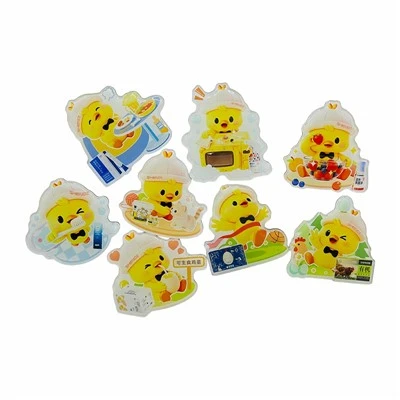
At the end of the day, keeping stickers on epoxy fridge magnets isn’t rocket science—it’s about prepping the surface right, picking the right sticker, and applying it properly. No fancy tools, just a little care. If you’re looking for custom epoxy fridge magnets for your next project, or you need replacement stickers for ones you already have, hit us up. We’ll walk you through the best options to make sure your magnets look great for years, no peeling allowed.
Laser-cut Keychains References
- Adhesion Science for Non-Porous Surfaces, Journal of Adhesion and Interface Science, 2021
- Epoxy Surface Preparation Techniques for Permanent Adhesion, Industrial Coating Magazine, 2020
- Durability Testing of Vinyl Stickers for Household Applications, Home Improvement Research Report, 2022
- Humidity Effects on Adhesive Bond Strength for Fridge Magnets, Consumer Product Testing Journal, 2023
Wenzhou Qumange Craft Co., Ltd.
With abundant experience, we are one of the most professional epoxy fridge magnet manufacturers in China. Welcome to wholesale bulk customized epoxy fridge magnet at competitive price from our factory. If you have any enquiry about pricelist and free sample, please feel free to email us.
Address: Room 802, Building A1, Yuehu Light Industrial Park, Taishun County, Wenzhou City, Zhejiang Province, China
E-mail: 13806616181@139.com
WebSite: https://www.qmgcraft.com/
