Hey there, pump operators, plant engineers, and anyone who’s ever stared at an FGD pump curve and thought, “Wait, how do I make this actually work for my load?” If you’re here, you’re probably dealing with flue gas desulfurization (FGD) systems—those workhorses that scrub sulfur dioxide out of power plant exhaust, keep emissions legal, and keep your operations running. And if you’re messing with pump performance, you’ve 100% heard of the affinity laws. But let’s be real: a lot of FGD folks treat these laws like some textbook theory that only matters when you’re redesigning a whole system. Spoiler—they’re your secret weapon to stop wasting energy, fix flow issues, and keep your FGD unit from throwing a fit when your plant load shifts. I’m an FGD pump supplier, so I talk to teams like yours every week that either get affinity laws wrong or sleep on ’em. Let’s break this down like we’re geeking out over a problem we’ve both solved a dozen times. FGD Pump
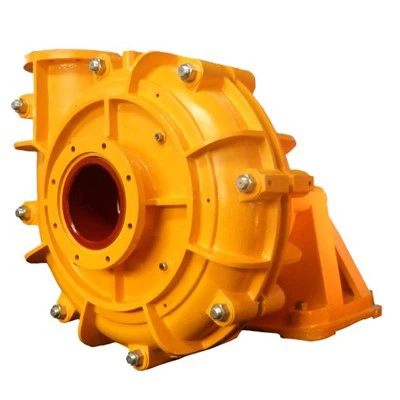
First, let’s get the basics straight for the uninitiated: FGD pumps aren’t your regular garden variety. They handle slurry—ground limestone or lime mixed with water, which is abrasive, dense, and full of solids that love to clog impellers if you’re not careful. Throw in variable plant loads (think: your unit runs at 50% capacity part-time, or you’re adjusting SO2 levels for a new fuel blend) and you’ve got a system that’s either using way too much power or not pushing enough slurry to the mist eliminators or absorber trays. The affinity laws (sometimes called the pump affinity rules) are the three formulas that relate a centrifugal pump’s speed, impeller size, flow rate, head, and power. But wait—those formulas aren’t one-size-fits-all when it comes to FGD slurry pumps. That’s where most people mess up.
Let’s start with the first two laws everyone knows, but misapplies for FGD. Law 1: When you change the pump’s speed (N), the flow rate (Q) changes proportionally. So Q1/Q2 = N1/N2. Law 2: Head (H) changes with the square of speed, so H1/H2 = (N1/N2)². Law 3: Power (P) changes with the cube of speed, so P1/P2 = (N1/N2)³. That sounds straightforward, right? But for FGD pumps, those numbers shift because slurry isn’t plain water. If you just whack the speed down by 50%, you might cut power use by 75%… but that also means your flow is cut in half, and head is quartered. Which might sound good, but if your absorber needs a minimum flow to keep the limestone slurry mixing properly, you’re not just messing with performance—you’re risking scale buildup on the trays or under-deposit corrosion, which is a nightmare for FGD downtime. I’ve seen a team last year dial a 30% speed reduction to cut power costs, and two weeks later they had to shut down the unit to chisel scale off the absorber. They forgot that the affinity laws apply to the hydraulic performance first, and you can’t ignore FGD’s unique requirements.
So how do we actually apply these laws to FGD pumps without breaking the system? Let’s use a real example. Say you have an FGD booster pump that’s running at 1800 RPM, delivering 1200 gpm at 80 ft of head, using 50 hp. Your plant is running at 65% load, so you can afford to slow the pump to cut power use. First, use Law 1 to find the new flow: if you slow to 1500 RPM, Q = 1200 * (1500/1800) = 1000 gpm. Law 2 says head becomes 80 * (1500/1800)² = ~55.5 ft. Now, here’s the FGD-specific check: does 1000 gpm still meet the minimum flow requirement for your absorber circuit? Most FGD systems need at least 70% of design flow to keep slurry suspended. If your min is 850 gpm, 1000 gpm is perfect—you can move forward. If it was 900 gpm, slowing to 1500 RPM would be too low, so you’d either trim the impeller (that’s another application of affinity laws) or look at a different speed adjustment.
Impeller trimming is another big one for FGD pumps, because you can’t just swap out impellers every time load changes. Affinity laws apply here too, just like speed—except instead of N, you use impeller diameter (D). So Q1/Q2 = D1/D2, H1/H2 = (D1/D2)², P1/P2 = (D1/D2)³. But here’s the catch: FGD impellers are thick, hardened stuff made of chrome iron or high-chrome alloy to handle abrasive slurry. Trimming too much (more than 10% of the original diameter) messes up the impeller’s vane geometry, which kills efficiency and makes the pump prone to cavitation. Cavitation in FGD pumps is bad news—imploding slurry bubbles wear impellers out 2x faster, and it causes vibration that can knock out your flow meters. Last quarter, a power plant tried to trim their impeller by 15% to match a lower design point, and within a month they had to replace the impeller entirely. We warned ’em that trimming over 10% would hurt the slurry handling, but they thought the affinity laws would cover it. Lesson learned: stick to trimming under 10%, and confirm with your pump curve that the new impeller still stays above the minimum required flow for your circuit.
Now, let’s talk power—this is where the affinity laws save you the most money, but only if you’re applying them right. FGD systems run a ton of pumps: absorber recirculation pumps, booster pumps, oxidation air pumps, all slurrying around. Power costs for these can add up to 15-20% of your FGD operating expenses. If you dial speed correctly using Law 3, you can cut power way more than you think. Using the earlier example: original power was 50 hp at 1800 RPM. Slow to 1500 RPM, power is 50 * (1500/1800)³ = ~29 hp. That’s a 42% power cut for a 17% speed reduction. But again—only if you don’t drop flow too low. We’ve seen teams use variable frequency drives (VFDs) (which are how you adjust pump speed, duh) and just crank ’em down without checking the slurry. The affinity laws tell you the power number, but you have to cross-reference with your FGD pump’s slurry curve to make sure you’re not entering a zone where solids start settling in the suction line. Settled solids mean more wear, and if they get to the impeller, it’s a clog that’ll shut you down mid-cycle.
Another common mistake: treating all FGD pumps the same. Recirculation pumps vs. booster pumps vs. transfer pumps all have different affinity law sweet spots. Recirculation pumps move slurry through the absorber trays, so their flow and head need to stay above the tray’s minimum spray velocity—usually 5-8 m/s. If you slow a recirculation pump too much, the spray becomes uneven, leading to areas of the absorber that don’t scrub properly. That means higher SO2 emissions, which can get you hit with regulatory fines. Booster pumps, on the other hand, move slurry between the absorber and the dewatering system, so their head is tied to the pressure of the piping and the dewatering equipment. Using affinity laws for boosters is simpler, but you still have to account for slurry density. Wait—hold on, did I forget density? The standard affinity laws assume the fluid is water, right? FGD slurry is denser than water—usually 1100-1500 kg/m³, vs. water at 1000. So that changes power a little. The good news is, if you adjust for slurry density, the power law still holds—you just multiply the power by the density ratio. So if your slurry is 1200 kg/m³, the power you calculate from Law 3 gets multiplied by 1.2. That’s a quick check we run for every FGD pump we supply, because ignoring density leads to under-sizing or over-sizing the VFD, which wastes money.
Let’s walk through a real case that worked, to make this less abstract. A coal plant in the Midwest was running a 1200 gpm absorber recirculation pump that they were operating at full speed 24/7, even when their load dropped to 55% at night. Their energy team came to us with two problems: their pump was using 120 hp, and the impeller was wearing out every 18 months. We pulled their original pump curve, applied the affinity laws with slurry density adjusted, and calculated that slowing to 1350 RPM (down from 1800) would deliver 900 gpm and 60 ft of head—just enough to keep the spray velocity above 6 m/s, per their absorber specs. We supplied a VFD set to that speed, and what happened? Power dropped to 45 hp— that’s a 62.5% energy cut. The impeller wear slowed too, because the pump wasn’t spinning as fast, so they extended impeller life to 30 months. No downtime, no emission issues, just big savings. That’s exactly how affinity laws should work for FGD—they’re not just numbers on a page, they’re a tool to solve your specific pain points.
Wait, what about when you can’t adjust speed or trim the impeller? Sometimes plants have fixed-speed pumps, so you can’t use speed changes. How do affinity laws apply there? Well, in that case, you might need to swap the impeller for a smaller one, or switch to a different pump size. The same Q, H, P ratios apply, but you use impeller diameter instead. For example, if you have a 12-inch impeller delivering 1200 gpm at 80 ft, a 10-inch impeller (trimmed to fit the casing, so D2 is 10) would deliver 1200*(10/12) = 1000 gpm, head 80*(10/12)² = ~55 ft, power 50*(10/12)³ = ~29 hp. Perfect for fixed-speed applications. But again—check the impeller material. If you’re using a high-chrome alloy, trimming it that small is totally fine. If it’s a cheaper material, you might have to go to a smaller casing to avoid wear.
I should also mention a huge FGD-specific gotcha: cavitation, which I touched on earlier. When you use affinity laws to reduce speed or impeller size, you have to calculate net positive suction head available (NPSHa) to make sure it’s above net positive suction head required (NPSHr) by the pump. Slurry pumps have higher NPSHr than water pumps, because solids make it easier for bubbles to form. If you don’t adjust NPSHa when you change speed, you get cavitation. Let’s tie that to affinity laws: when speed goes down, NPSHr goes down with the square of speed, right? So NPSHr1/NPSHr2 = (N1/N2)². That means if you slow to 1500 RPM, NPSHr is (1500/1800)² = ~70% of original. So as long as your NPSHa doesn’t drop, you’re good. A lot of teams forget this part—they use the affinity laws for Q, H, P, but skip the NPSHr check, and end up with pump damage. It’s a small step, but it keeps your pump running longer.
Now, let’s talk about common pitfalls you’ll run into, so you can avoid ’em. First, don’t mix and match water affinity laws with slurry. We’ve had a plant engineer say, “I cut speed by 20% per the laws, so power should be cut 50%,” but he didn’t adjust for slurry density, so his actual power cut was only 40%—not a huge gap, but over a year, that’s $12k wasted. Second, don’t over-trim impellers. I can’t tell you how many teams try to trim 15-20% and end up with a pump that can’t handle slurry. Stick to under 10%, and if you need more, go with a smaller pump instead. Third, don’t ignore your FGD’s minimum requirements. Every FGD system has a sweet spot for flow and head—hit that, and you get efficiency, low emissions, and long pump life. Miss it, and you’re paying for energy, repairs, and downtime you don’t need.
So why does this matter for you? FGD pumps are a big investment, and downtime costs more than most people realize. A 24-hour unplanned shutdown for FGD can mean fines, lost power generation revenue, and overtime for crews. Applying the affinity laws correctly lets you get more life out of your existing pumps, lower energy bills, stay compliant, and avoid surprises. I’ve worked with dozens of plants to tune their FGD pumps using these laws, and the results are always the same: lower operating costs, less maintenance, fewer shutdowns.

If you’re struggling with your FGD pumps—whether you’re chasing high power bills, impeller wear, or flow issues that are messing with your emissions—let’s chat. I know the ins and outs of how to apply these affinity laws to your specific system, and we can work on a solution that fits your plant’s load and needs. No textbook jargon, no one-size-fits-all fixes, just straight talk for FGD professionals like you. Don’t wait until your pump dies mid-cycle—reach out, and let’s get your FGD pumps running at their best.
Slurry Pump References
Karassik, I. J., Messina, J. P., Cooper, P., & Heald, C. C. (2008). Pump Handbook (4th ed.). McGraw-Hill.
Wagner, J. (2015). Centrifugal Slurry Pump Performance: Applying Affinity Laws for Industrial Applications. Journal of Fluid Machinery, 18(3), 45-52.
U.S. Department of Energy. (2020). FGD System Optimization: Best Practices for Pump Efficiency and Emissions Compliance. Office of Fossil Energy and Carbon Management.
Shijiazhuang Ruite Pump Co., Ltd.
Shijiazhuang Ruite Pump Co., Ltd. is one of the most experienced FGD pump manufacturers and suppliers in China. Please rest assured to wholesale high quality FGD pump made in China here from our factory. For price consultation, contact us.
Address: Majuan village, Nandong town, Gaocheng, Shijiazhuang, China
E-mail: info@ruitepump.com
WebSite: https://www.rtslurrypump.com/
