Hey there! As a supplier of Mini Electric Hoists, I often get asked about the differences between wire ropes and chain hoists in these nifty little machines. So, let’s dive right in and break it down. Mini Electric Hoist
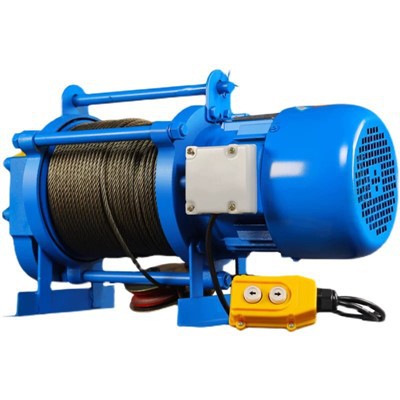
First off, let’s talk about wire ropes. Wire ropes are made up of multiple strands of wire twisted together. They’re known for their high strength and flexibility. In a Mini Electric Hoist, wire ropes can handle heavy loads with relative ease. They distribute the load evenly across the strands, which reduces stress on any single part of the rope. This means they’re less likely to break under pressure, making them a reliable choice for lifting heavy objects.
One of the big advantages of wire ropes is their smooth operation. When you’re using a Mini Electric Hoist with a wire rope, you’ll notice that the lifting and lowering are pretty seamless. There’s less jerking or sudden movements, which is really important when you’re trying to handle delicate or fragile items. The smoothness also helps to reduce wear and tear on the hoist itself, which can extend its lifespan.
Another plus is that wire ropes are resistant to corrosion. If you’re using your Mini Electric Hoist in an environment where there’s a lot of moisture or chemicals, a wire rope is going to hold up better than some other options. This makes them a great choice for outdoor use or in industrial settings where the hoist might be exposed to harsh conditions.
However, wire ropes aren’t without their drawbacks. They’re more prone to abrasion than chain hoists. If the wire rope rubs against a rough surface during operation, it can start to wear down the individual wires. Over time, this can weaken the rope and make it more likely to break. Also, wire ropes are a bit more difficult to inspect for damage. You need to look closely at each strand to make sure there aren’t any signs of wear or fraying.
Now, let’s switch gears and talk about chain hoists. Chain hoists use a chain to lift and lower loads. Chains are made up of individual links that are connected together. They’re known for their durability and strength. In a Mini Electric Hoist, a chain hoist can handle heavy loads just as well as a wire rope, if not better in some cases.
One of the main advantages of chain hoists is their resistance to abrasion. Chains can withstand a lot of rubbing and scraping without getting damaged. This makes them a great choice for applications where the hoist is going to be used in a rough environment or where the load might come into contact with sharp edges.
Chain hoists are also easier to inspect for damage. You can quickly look at each link in the chain to make sure there aren’t any signs of wear, cracks, or deformation. If you do notice any issues, it’s usually easier to replace a single link in a chain than it is to repair or replace a wire rope.
Another benefit of chain hoists is their ability to operate in tight spaces. The chain can be easily maneuvered around obstacles, which is really useful if you’re working in a confined area. This makes them a popular choice for workshops and small industrial settings where space is limited.
But, chain hoists also have some disadvantages. They tend to be a bit noisier than wire ropes. When the chain moves through the hoist, it can make a clanking sound, which can be a nuisance in a quiet environment. Also, chains are more prone to rust and corrosion than wire ropes. If you’re using a chain hoist in a wet or humid environment, you need to make sure it’s properly lubricated and maintained to prevent rust from forming.
So, which one should you choose for your Mini Electric Hoist? Well, it really depends on your specific needs. If you’re lifting heavy loads in a smooth, controlled environment and you’re worried about corrosion, a wire rope might be the way to go. On the other hand, if you’re working in a rough environment where abrasion is a concern and you need to operate in tight spaces, a chain hoist might be a better choice.
As a Mini Electric Hoist supplier, I’ve seen firsthand how different applications call for different types of hoists. That’s why we offer both wire rope and chain hoist options in our Mini Electric Hoist range. We want to make sure you have the right tool for the job.
If you’re in the market for a Mini Electric Hoist and you’re not sure which type is best for you, don’t hesitate to reach out. Our team of experts is here to help you make the right decision. We can answer any questions you have and provide you with all the information you need to choose the perfect hoist for your needs. Whether you’re a small business owner, a DIY enthusiast, or an industrial professional, we’ve got you covered.

So, if you’re interested in learning more about our Mini Electric Hoists or you’re ready to place an order, just get in touch. We’re looking forward to working with you and helping you find the ideal hoist for your project.
Indoor and Outdoor Winches References:
- Crane and Hoist Handbook
- Industrial Lifting Equipment Manual
- Machinery’s Handbook
Hebei Hengtai Crane Machinery Manufacturing Co., Ltd.
Address: Weigezhuang Village, Donglu Township, Qingyuan District, Baoding City, Hebei Province
E-mail: hbht@cnhengtai.com
WebSite: https://www.cnhengtai.com/
