Yo, what’s up! I’m a supplier of Secondary Injection Relay Test Sets. Today, I wanna chat about what the electromagnetic compatibility (EMC) of a Secondary Injection Relay Test Set is. Secondary Injection Relay Test Set
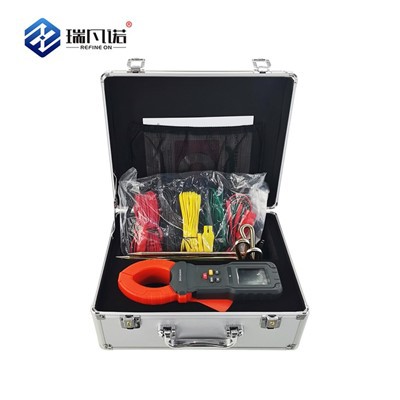
First off, let me give you a quick intro to the Secondary Injection Relay Test Set. It’s a crucial tool in the electrical power industry. It’s used to test protective relays, which are like the guardians of electrical systems. These relays detect faults and abnormal conditions in the power grid and then quickly isolate the faulty parts to prevent further damage and keep the whole system running smoothly.
Now, onto electromagnetic compatibility. EMC is all about how well a device can operate in its electromagnetic environment without causing interference to other devices and also being immune to the interference from other devices. In simpler terms, it’s like making sure everyone in a room can talk and listen without getting in each other’s way.
For a Secondary Injection Relay Test Set, EMC is super important. In a power substation or other electrical testing environments, there are all kinds of electromagnetic disturbances. You’ve got things like high – voltage electrical equipment generating strong electromagnetic fields, radio frequency interference from communication devices, and transient electrical impulses from switching operations.
If a Secondary Injection Relay Test Set doesn’t have good EMC, it can cause a whole bunch of problems. For one, it might produce electromagnetic interference that messes with the normal operation of other nearby electrical equipment. This could lead to false alarms in other protective relays, inaccurate readings on monitoring devices, or even complete malfunctions of some sensitive equipment.
On the other hand, if it’s not immune to external electromagnetic interference, the test results it gives might be inaccurate. And inaccurate test results are a big no – no when you’re dealing with protective relays. A false test result could mean that a relay that’s actually faulty is deemed to be working fine, or vice versa. This could put the entire power system at risk, as a malfunctioning relay might not be able to protect the system when a real fault occurs.
So, how do we ensure good EMC for our Secondary Injection Relay Test Sets? Well, there are a few key steps in the design and manufacturing process.
During the design phase, we use a lot of shielding techniques. We enclose the sensitive electronic components of the test set in metal enclosures. These metal enclosures act like a shield, blocking out external electromagnetic fields and preventing the internal electromagnetic fields generated by the test set from leaking out. It’s like putting a protective shell around the important parts of the device.
We also pay close attention to the layout of the printed circuit boards (PCBs) inside the test set. The way the components are placed on the PCB can have a big impact on EMC. We try to keep the high – frequency and high – power components away from the sensitive low – frequency components to reduce the chances of interference. And we use proper grounding techniques on the PCB to provide a path for the unwanted electrical currents to flow safely to the ground.
In addition to shielding and PCB layout, we also use filtering components. These filters are designed to block out specific frequencies of electromagnetic interference. For example, we might use low – pass filters to block out high – frequency noise, or band – pass filters to allow only a certain range of frequencies to pass through. These filters are like the bouncers at a club, only letting in the right "guests" (frequencies) and keeping out the troublemakers (interference).
When it comes to manufacturing, we follow strict quality control procedures. We make sure that all the components are properly installed and that the shielding enclosures are well – sealed. Any small gap in the shielding can allow electromagnetic waves to leak in or out, so we pay really close attention to these details.
Another aspect of EMC is the software side. The test set’s software needs to be designed in such a way that it can handle electromagnetic interference. It should be able to detect and correct any errors caused by interference in real – time. For example, if there’s a sudden spike in the electrical signal due to interference, the software should be able to recognize it as an abnormal signal and not let it affect the test results.
Now, you might be wondering how we know if our Secondary Injection Relay Test Sets actually have good EMC. Well, we subject them to a series of rigorous tests. These tests are based on international standards, such as the IEC 61000 series. In these tests, the test set is exposed to different types of electromagnetic disturbances, like electrostatic discharges, radio frequency electromagnetic fields, and electrical fast transients. We then check if the test set can still operate normally and give accurate test results under these conditions.
If you’re in the market for a Secondary Injection Relay Test Set, EMC should be one of your top considerations. A test set with good EMC will not only give you accurate test results but also ensure that it doesn’t cause any problems for other electrical equipment in your testing environment.
As a supplier, I can offer you high – quality Secondary Injection Relay Test Sets that have been carefully designed and tested for excellent EMC. Our products are reliable, accurate, and built to withstand the tough electromagnetic environments in power substations and other electrical testing sites.
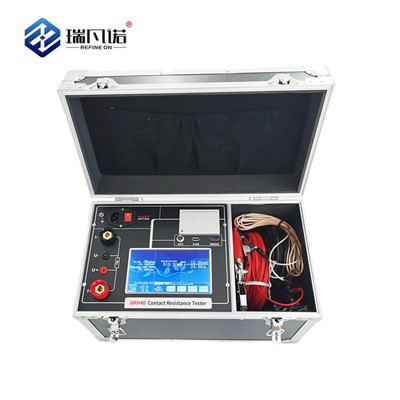
If you’re interested in learning more about our Secondary Injection Relay Test Sets or want to discuss a potential purchase, don’t hesitate to reach out. We’re always happy to have a chat and help you find the right solution for your needs.
Transformer Tester References:
- IEC 61000 series standards on electromagnetic compatibility
- Textbooks on electrical engineering and power system protection
Refine On (Hebei) Electric Power Technology Co., Ltd.
Address: Building 13, Liandong U Valley, No.64, Jing SAN South Street, Economic Development Zone, Mancheng District, Baoding City, China
E-mail: victor@transformer-test.com
WebSite: https://www.transformer-test.com/
