If you’ve ever been mid-sprint in the kitchen, blending smoothies while the toaster cranks and the oven preheats, only to have every appliance cut out abruptly, chances are you’ve witnessed a circuit breaker do its job. For most of us, that little metal switch in the electrical panel is just a “switch that trips when things go wrong”—but as a circuit breaker supplier who’s worked with residential electricians, commercial contractors, and DIY homeowners for over a decade, I’m here to tell you there’s a lot more to these unassuming devices than meets the eye. They’re the unsung heroes of electrical safety, quietly protecting homes, businesses, and even industrial facilities from fires and damage that could be catastrophic if left unchecked. Circuit Breakers
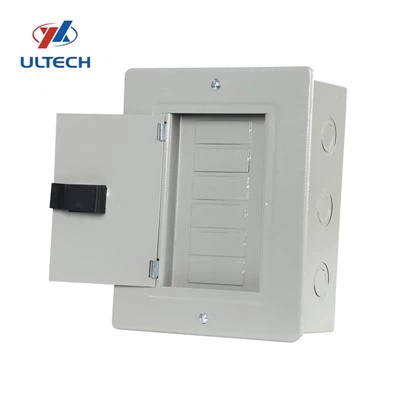
Let’s start with the basics: what is a circuit breaker, exactly? At its core, it’s an automated electrical safety switch designed to interrupt current flow when it detects an anomaly in an electrical circuit. Think of it like a traffic cop for electricity. Under normal conditions, it lets current flow freely, powering your lights, fridge, and tools. When something goes wrong, it slams on the brakes in milliseconds, cutting off power before the issue can turn into a hazard. This isn’t a new invention—early versions date back to the late 1800s, right after Thomas Edison and Nikola Tesla were racing to deploy the first commercial electrical systems. Back then, they used fuses, thin metal wires that burned out when overloaded, requiring you to replace them every time they failed. Fuses worked, but they were a hassle, and you couldn’t just flip a switch to reset them. Circuit breakers changed that game entirely, offering reusable, reliable protection that’s still the gold standard today.
Now, let’s break down how they work, because understanding the inner mechanism is key to knowing why they matter. Every standard circuit breaker has three main parts: a contact mechanism, a thermal (heat-sensitive) element, and a magnetic (current-sensitive) trip mechanism. Let’s walk through a common scenario, like when you plug a space heater and a power-hungry power tool into the same outlet on the same circuit. That circuit is rated for, say, 15 amps—meaning it can safely handle a maximum of 1800 watts. The space heater pulls 1500 watts, the power tool pulls 1000 watts, so together they’re cranking out 2500 watts, way over the limit. First, the thermal element kicks in: a bimetallic strip, made of two different metals that expand at different rates, bends when heated by the excess current. This strip is connected to a small spring-loaded trigger. If the overcurrent is mild and sustained (like leaving a bunch of devices plugged in over a long weekend), the strip bends slowly, trips the trigger, and flips the switch to the “off” position. For a more urgent issue, like a short circuit—where a hot wire touches a neutral or ground wire, creating a low-resistance path that lets a surge of thousands of amps flow—the magnetic mechanism takes over. A coil around the current-carrying wire generates a magnetic field strong enough to yank the trip mechanism instantly, cutting power in as little as 1/10,000 of a second. That’s fast enough to prevent the wire from overheating, melting insulation, and starting a fire.
Not all circuit breakers are the same, though. As a supplier, we carry a range of types tailored to different needs, because one size never fits all. Let’s go over the most common ones you’ll encounter:
First, standard thermal-magnetic breakers. These are the ones you’ll find in almost every home’s main electrical panel, the workhorse of residential and light commercial use. They handle overloading and short circuits perfectly for everyday needs, and they’re affordable, easy to install, and simple to replace when needed.
Next, Ground Fault Circuit Interrupters (GFCIs). If you’ve ever seen a breaker in the bathroom, kitchen, or garage that says “TEST” and “RESET,” that’s a GFCI. These are designed to protect people, not just property. They monitor the balance of current between the hot and neutral wires. Under normal conditions, the current going out matches the current coming back. If even a tiny fraction—like 5 milliamps, way less than what it takes to kill a human—leaks to the ground (say, you drop a hair dryer in a sink full of water), the GFCI trips instantly, cutting power before the current can reach your body. They’re required code in all areas where water and electricity could mix, and they’re non-negotiable for safety.
Then there are Arc Fault Circuit Interrupters (AFCIs). These are relatively new, mandated by electrical codes in most countries for bedrooms, living rooms, and other areas where electrical cords or devices might fray. Arcs are small, unintended sparks that happen when damaged wires touch or separate. Over time, these arcs can get hot enough to ignite furniture, curtains, or drywall, even before they cause an overload. AFCIs detect the unique signature of these arcs—tiny, repeating electrical fluctuations that thermal and magnetic breakers miss—and trip the circuit before a fire starts. They’ve been proven to reduce residential electrical fires by more than 50% in areas that require them, which is why they’re such a critical part of modern homes.
For larger applications, like commercial buildings, warehouses, or industrial facilities, we also carry Molded Case Circuit Breakers (MCCBs) and Power Circuit Breakers. MCCBs are housed in a durable, molded plastic case, rated for higher currents (from 100 amps up to 2500 amps) than standard residential breakers, making them ideal for panel boards that power office spaces, retail stores, or large equipment. Power circuit breakers, on the other hand, are heavy-duty, designed for even higher voltage and current levels, used in power distribution centers, manufacturing plants, and even renewable energy setups like solar farms. They’re built to withstand harsh environments, from extreme cold in a warehouse loading dock to the high voltage of a solar array, and offer advanced monitoring features that let operators track current levels remotely.
A common question I get from customers is: “How do I know if my circuit breaker is bad?” Because while they’re reliable, they do wear out over time, especially in older homes or harsh conditions. The first sign is when a breaker trips repeatedly without an obvious overload or short circuit. If you reset your breaker, plug in a few devices, and it trips again 10 minutes later, that’s a red flag—it could mean the thermal element is worn out, or the breaker is just getting old and can’t handle its rated current anymore. Another sign is if the breaker feels warm to the touch when it’s not tripped, or if it makes a buzzing, humming noise even when all devices are off. Occasionally, you might also find a breaker that won’t reset at all—this means the trip mechanism is stuck, and the breaker needs to be replaced right away. I always advise customers to never “tie” a breaker shut with a pencil or tape as a workaround. That’s extremely dangerous—if there’s a real hazard, the breaker won’t trip, and you’re putting your home and family at serious risk.
As a circuit breaker supplier, I also want to talk about why choosing the right breaker matters, because not all breakers are created equal. There are cheap, off-brand breakers on the market that don’t meet safety standards, with poorly calibrated trip mechanisms that take too long to trigger, or fail to trip at all when they need to. I’ve seen too many cases where a homeowner saved $10 on a cheap breaker, only to have a fire start because it didn’t interrupt a short circuit. When you’re buying a breaker, look for certifications like UL (Underwriters Laboratories) or CE, which mean the product has been tested to meet strict safety standards. Also, never use a breaker rated for a higher amperage than your circuit can handle. For example, a 20-amp circuit needs a 20-amp breaker—if you put a 30-amp breaker in, it won’t trip when the circuit is overloaded, leading to overheating wires and fire. That’s a mistake I see all too often, and it’s one of the most common causes of residential electrical fires.
Another important point: circuit breakers aren’t just for new construction. If you’re renovating an older home, updating your electrical panel, or adding new appliances like a hot tub, an electric car charger, or a new oven, you’ll need to make sure your breakers are sized correctly and up to code. For example, if you’re installing an EV charger that pulls 40 amps, you can’t use a 15-amp or 20-amp breaker—you need a 50-amp breaker designed for heavy-duty use, and a dedicated circuit just for the charger. Skipping that step can lead to overheating wires, tripped breakers, or even electrical fires.
I’ve been in this industry long enough to see how a small, well-chosen circuit breaker can make a world of difference. Last year, we supplied a set of GFCIs and AFCIs to a family that had just bought a 1950s home with original wiring. A few months after installation, the AFCI in their living room tripped—turns out, a lamp cord under their couch had frayed, creating a small arc that the old, uncalibrated breaker had missed. That arc would have ignited their couch in a matter of minutes, but the AFCI caught it before it turned into a disaster. Stories like that are why I do what I do, and why I make sure every breaker we supply is tested, certified, and designed to keep people safe.
If you’re a homeowner looking to upgrade your panel, a contractor working on a new commercial build, or a facility manager needing heavy-duty breakers for industrial equipment, we have a wide range of options to fit every need and budget. We carry residential, commercial, and industrial breakers, plus accessories like breaker panels, replacement parts, and testing tools to make sure your electrical system is safe and up to code. Our team has years of experience working with electricians, contractors, and DIY enthusiasts, and we can help you figure out exactly what you need, whether you’re replacing a single breaker or outfitting an entire building’s electrical system.

If you’re ready to talk about your circuit breaker needs, or have questions about which type of breaker is right for your project, don’t hesitate to reach out. We’re here to help you make safe, reliable choices that protect your home, business, and the people in it.
Combination Meter Sockets References:
- National Fire Protection Association. (2022). Electrical Fires in U.S. Homes, 2016–2020. Quincy, MA: National Fire Protection Association.
- Underwriters Laboratories Inc. (2021). Standard for Safety for Molded-Case Circuit Breakers, Motor Circuit Controllers, and Fuseless Switches (UL 489). Northbrook, IL: Underwriters Laboratories Inc.
- International Code Council. (2023). International Residential Code (IRC) for Electrical Systems. Country Club Hills, IL: International Code Council.
- Electric Power Research Institute. (2020). Circuit Breaker Technology: Advances in Protection for Modern Electrical Distribution. Palo Alto, CA: Electric Power Research Institute.
Zhejiang Youtai Electrical Co., Ltd.
We are one of the most experienced circuit breakers manufacturers and suppliers in China. With a professional production team, we are able to meet the needs of the majority of our customers. Please rest assured to wholesale customized circuit breakers from our factory. Contact us for more cheap products.
Address: No.790, Nanming Rd., Shuige Industrial Zone, Lishui, Zhejiang, China
E-mail: sale@ultech.cc
WebSite: https://www.zhejiangyoutai.com/
